Opinion
WHEN THE LECTURE HALL IGNORES THE STREET: A RESPONSE TO PROFESSOR JOHN AKECH
Author
Juol Nhomngek
Guest Contributor
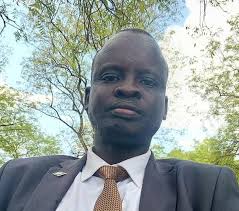
Hon. Juol Nhomngek Daniel, is a South Sudanese lawyer, politician, and academic. He is the member of the Sudan People's Liberation Movement-in-Opposition (SPLM-IO). He is a lecturer at the Stanford International University College in Juba and the Deputy Dean of its College of Law
As I scrolled down on my Facebook page today, I came across the statement of Professor John Akech rebuking what he terms as the government critics, I would like to admit that his comment is correct, at least in principle. As a matter of fact, and in principle, public discourse must be anchored in truth, discipline, and intellectual honesty. This is because a nation cannot be built on rumor dressed as fact or anger masquerading as analysis. On that narrow but important ground, his call for ethical criticism deserves acknowledgment.
But beyond that principle, the argument of Professor John Akech collapses under the weight of reality on the streets of Juba and other towns of South Sudan. What the Vice Chancellor, Professor John Akech, diagnoses as “declining standards of discourse” is, in truth, a symptom, not the disease. He is therefore prescribing academic etiquette to a society that is politically hemorrhaging. The problem is not merely that citizens speak harshly; it is that they are living under conditions that have rendered polite language irrelevant.
The University of Juba, as the intellectual engine of the state, should not mistake rebellion for indiscipline. What is unfolding across social media and public spaces is not a seminar debate gone wrong, it is a society in rupture. A population that no longer trusts institutions does not speak in footnotes; it speaks in fire. To rebuke the tone of the public without interrogating the conduct of the state is to polish the mirror while ignoring the cracks in the wall.
The crack in the wall is the absence of accountability in the system, which defines the accountable government. An accountable government, by constitutional design, is not a ceremonial abstraction. It is a living system anchored in transparency, legality, and answerability. Article 32 of the Transitional Constitution, read together with the Access to Information Act, 2013, does not merely permit expression, it protects the citizen’s right to question power. That right is not conditional upon politeness; it is triggered by necessity. And necessity is precisely what defines the current moment.
The architecture of accountability in South Sudan such as judiciary, legislature, anti-corruption bodies, the Human Rights Commission, the Public Grievance Chamber, exists impressively on paper. But institutions that cannot act independently, cannot enforce their mandates, and cannot hold power to account become ceremonial ornaments in a system that has abandoned its own legal conscience.
Thus, in the absence of legal conscience, the public and citizens become victims of circumstances, and as a result, they become hostile towards the establishment, which is manifested in the forms of criticisms we always see social media. This is because the lack of accountability creates the vacuum in the system. In such a vacuum, social media does not distort accountability, it replaces it.
What the Vice Chancellor calls “fabricated falsehoods” must indeed be challenged where they exist. Falsehood corrodes truth. But it is equally dangerous to ignore the conditions that breed them: opacity, impunity, and the systematic closure of formal channels of redress. What Hon. Professor has not addressed his mind to is that when citizens cannot access information, cannot obtain justice, and cannot see consequences for misconduct, they do not become silent, they become radical. They can vent out their grievances, anger and stress through any existing media of communication. This should not be seen as a defense of misinformation. It is an explanation of its ecosystem.
The deeper crisis is that the state has drifted from its foundational obligations as defined in the person of government. Government, in its conventional meaning, is an accountable system, one in which public officials explain decisions, justify actions, and accept responsibility for outcomes. That system is sustained through political accountability (elections), legal accountability (courts), administrative accountability (bureaucracy), and social accountability (citizen engagement).
Where the pillars of accountability weaken, legitimacy erodes. Where legitimacy erodes, public trust collapses. And where trust collapses, discourse mutates, from reasoned critique into raw resistance. This is the stage South Sudan finds itself in. To therefore admonish the public, as though they are participants in a controlled academic symposium, is to misunderstand the gravity of the moment.
The public is not merely debating government; they are reacting to it. Their language is shaped not by theory, but by lived experience: economic hardship, institutional failure, insecurity, and the visible absence of consequences for those entrusted with power. In such an environment, the line between criticism and anger inevitably blurs. If Professor Akech seeks higher standards in public discourse, then the demand must begin where it constitutionally belongs, with the state itself. Ethical discourse is not imposed from above; it is cultivated by trust. And trust is not requested; it is earned through accountability.
A government that opens its books, respects its laws, empowers its institutions, and subjects itself to scrutiny will not need to plead for civility, the public will supply it naturally. But a system perceived as opaque, unresponsive, and unaccountable will produce the opposite: a citizenry that speaks not to persuade, but to protest. The university, as a citadel of knowledge, must therefore rise above selective critique. It must not only defend the ethics of speech; it must interrogate the ethics of power.
Anything less risks turning scholarship into a shield for the status quo. In the end, the question is not whether the public is too harsh. The question is: what has made them this way? Until that is answered honestly, calls for “ethical discourse” will sound less like guidance, and more like a lecture delivered to a nation that has already left the classroom.
Share this article