Opinion
THE GUARDIANS OF POWER: TEN CHILLING PARALLELS BETWEEN IRAN’S IRGC AND SOUTH SUDAN’S SPLM-IG
Author
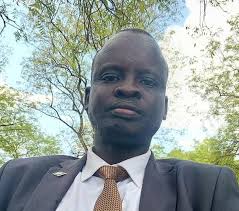
Juol Nhomngek
Guest Contributor
Hon. Juol Nhomngek Daniel, is a South Sudanese lawyer, politician, and academic. He is the member of the Sudan People's Liberation Movement-in-Opposition (SPLM-IO). He is a lecturer at the Stanford International University College in Juba and the Deputy Dean of its College of Law
I hope that after several weeks of fighting between Iran and the USA and Israel and the comfortable diplomatic relations between South Sudan and international community, some people who are interested in geopolitics must have drawn the conclusion that there is a strong resemblance between the Islamic Revolutionary Guard Corps (IRGC) in Iran and the Sudan People's Liberation Movement-In Government (SPLM-IG) in South Sudan. These two political military organisations exhibit striking similar authoritarian approaches to governance, which places regime survival above humanitarian concerns. Their actions, ranging from violent crackdowns of dissents, leniency on corruption with zero accountability to citizens, demonstrate a shared disregard for conventional human rights, frequently reacting only to force rather than diplomatic pressure no matter how serious it may be.
Critical observations and analysis have made me to reach the above conclusion on the similarities between two distance politico military organisations but which are at the proximity in the idea of what constitutes the state. Though the Islamic Revolutionary Guard Corps (IRGC) in Iran and the Sudan People’s Liberation Movement-In Government (SPLM-IG) in South Sudan were born from different histories, different ideologies, and different geographies. One emerged from the 1979 Islamic Revolution in Tehran; the other from the long liberation war against Khartoum in 1983, the two exhibit similarities. For instance, despite the differences in their origins and times, both have evolved into remarkably similar political-security machines whose central philosophy is not national transformation, but regime survival.
Both institutions began as revolutionary movements promising justice, liberation, dignity, and national renewal. Over time, however, they transformed into deeply militarized ruling establishments where power preservation became more important than democratic governance, human welfare, or institutional accountability. In both Tehran and Juba, the state increasingly exists to protect the ruling elite rather than the citizens.
The IRGC and the SPLM-IG now represent two modern examples of how liberation movements can mutate into authoritarian power structures that fuse politics, military control, economic monopolization, propaganda, and fear into a single system of governance. The bodies share striking similarities which include
1. Regime Protection Above National Interest
The first and most striking similarity is that both entities primarily exist to protect the ruling order rather than the state itself. The IRGC was specifically created after the Iranian Revolution to safeguard the Islamic Republic from internal and external threats. Its loyalty is not to ordinary Iranians, but to the survival of the revolutionary regime and Supreme Leader. Likewise, the SPLM-IG increasingly treats the South Sudanese state as an instrument for protecting the ruling political clique and above all President Salva Kiir Mayardit rather than serving citizens.
In both systems, criticism of government policies is interpreted not as democratic participation, but as rebellion against the state itself. Opposition figures become “traitors,” activists become “foreign agents,” and peaceful dissent is transformed into a security threat. This mentality explains why hospitals collapse, schools’ decay, and poverty deepens while security budgets continue expanding. Regime survival always comes first.
2. Transformation from Liberation Movements into Dominant Power Machines
Both organizations emerged from armed struggles and later converted military legitimacy into political dominance. The IRGC emerged from revolutionary warfare and ideological mobilization after the Shah’s fall. The SPLM emerged from decades of armed resistance against Sudanese marginalization. Initially, both movements carried enormous symbolic legitimacy among their populations. However, once in power, both transformed liberation credentials into permanent political entitlement.
In Iran, revolutionary history became a tool for suppressing reformists by accusing them of betraying the revolution. In South Sudan, liberation history is repeatedly weaponized to silence criticism, with political elites presenting themselves as the sole custodians of independence.
The tragedy is that liberation movements that once fought authoritarianism gradually reproduced the same oppressive systems they claimed to resist.
3. Militarization of Governance
Both the IRGC and SPLM-IG blur the distinction between military institutions and civilian governance. In Iran, the IRGC influences parliament, intelligence services, foreign policy, media, education, and the judiciary. It operates almost like a parallel government. In South Sudan, military commanders occupy senior political positions, while security organs heavily influence state administration and political decision-making.
In both countries, governance increasingly resembles military command structures rather than civilian democratic institutions. Cabinets become extensions of security interests. Political negotiations become security calculations. Citizens become subjects to monitor rather than populations to serve. This militarization creates states governed through fear rather than consent.
4. Economic Empires Built Around Political Loyalty
Another major similarity is the fusion of economic control with political domination. The IRGC controls vast sectors of Iran’s economy, including construction, telecommunications, banking, energy, and transport. Economic dominance provides financial independence and political leverage.
Similarly, the SPLM-IG’s power structure revolves heavily around oil revenues and state-controlled resources. Access to wealth frequently depends on political loyalty rather than merit or institutional transparency.
In both systems, economic opportunity becomes a reward for obedience. Contracts, government jobs, business licenses, and access to state resources are distributed through patronage networks designed to strengthen regime loyalty. Those outside the ruling circle are economically marginalized. This creates a political economy where corruption is not accidental, it becomes a governing mechanism.
5. Use of Parallel Security and Proxy Forces
Both entities rely on auxiliary security structures to enforce political control while maintaining plausible deniability. The IRGC uses the Basij militia to suppress protests, monitor society, and intimidate dissenters. The SPLM-IG has repeatedly relied on aligned militias such as Agwelek and Abushok, which are irregular armed groups, and localized security actors to consolidate territorial and political control. These forces often operate outside formal legal accountability embodied by the National Security Forces.
Using allied militias is security and political strategy of evasion of accountability. For instance, when abuses occur at the hands of such militias, leadership in charge of the system distances itself by blaming “rogue elements” or “local commanders.” Yet the strategic objective remains the same: maintaining fear and discouraging organized resistance. Parallel security systems allow regimes to expand repression while avoiding direct institutional responsibility.
6. Suppression of Dissent and Fear of Independent Voices
Both systems demonstrate deep hostility toward independent political expression.
In Iran, journalists, students, women activists, reformists, and protest organizers face arrests, surveillance, intimidation, and imprisonment. In South Sudan, critics, journalists, civil society actors, and opposition voices often face harassment, detention, intimidation, or restrictions.
The underlying logic is identical: free expression threatens centralized power.
Independent media becomes dangerous because it exposes corruption. Civil society becomes suspicious because it mobilizes citizens outside state control. Opposition politics becomes unacceptable because it challenges monopoly over power. Both systems therefore attempt to monopolize truth itself.
7. Ideology as a Tool of Political Control
The IRGC uses revolutionary Shi’a ideology to justify its authority, portraying itself as the defender of Islam and resistance. The SPLM-IG relies heavily on liberation rhetoric and wartime legitimacy to justify continued political dominance. In both cases, ideology functions less as a moral vision and more as a political shield.
Criticism becomes framed as betrayal of religion, revolution, liberation, or national unity. This creates emotional and psychological pressure against dissent. Yet there is a growing contradiction between official ideology and lived reality. A movement claiming to defend justice presides over corruption. A movement claiming liberation increasingly restricts political freedoms. A movement claiming sacrifice gradually concentrates wealth and privilege within elite circles.
8. The Rise of the “Deep State”
Both entities increasingly operate above formal civilian institutions. In Iran, elected officials often possess less real power than IRGC-linked networks. In South Sudan, formal institutions frequently appear subordinate to security-centered political authority. This creates what many analysts describe as “deep state” governance: an invisible power structure operating behind official institutions.
Courts lose independence. Legislatures become symbolic. Constitutional structures weaken under the dominance of security elites. As a result, accountability becomes nearly impossible because real authority exists outside formal systems.
9. Survival Through Crisis and Fear
Both systems thrive politically during instability. External threats, internal conflicts, and national crises become opportunities for consolidating control. The IRGC frequently uses regional tensions and sanctions to justify securitization and repression. Likewise, conflict and insecurity in South Sudan often strengthen the argument for centralized military control. Fear becomes politically useful.
Citizens are told that without the ruling structure, the country will collapse into chaos. Opposition is portrayed not as an alternative government, but as a pathway to national destruction. This “survivalist politics” allows both systems to justify extraordinary measures indefinitely.
10. The “Winner-Takes-All” Philosophy
Perhaps the most dangerous similarity is their resistance to genuine power-sharing. Both systems treat compromise as weakness and view decentralization as a threat to survival. Political inclusion is tolerated only when it does not fundamentally threaten the ruling center.
This mentality creates perpetual instability because excluded groups eventually seek alternative means of influence, often through violence.
Instead of building strong national institutions capable of accommodating diversity and competition, both systems prioritize monopolistic control over power and resources. The result is a fragile state permanently trapped between authoritarianism and crisis.
Why Pressure Rarely Changes Them
Diplomatic condemnations, media criticism, and international pressure rarely transform such systems because both are structurally designed to resist moral persuasion. Their leaders are insulated from public suffering. Their economic networks are protected through patronage and shadow structures. Their political worldview interprets compromise as surrender.
Most importantly, both systems believe survival justifies any cost. Economic collapse, humanitarian suffering, sanctions, or international isolation become acceptable sacrifices if they preserve the ruling order. This is why criticism alone often fails. These are not systems primarily seeking legitimacy through democratic approval; they seek survival through control.
Conclusion
The IRGC and the SPLM-IG illustrate a broader political tragedy common in many post-revolutionary states: movements born in resistance can eventually become the very structures they once opposed. Both transformed revolutionary legitimacy into permanent entitlement. Both fused security institutions with political authority. Both centralized wealth, weakened accountability, restricted dissent, and prioritized regime survival over public welfare. The greatest danger lies not merely in authoritarianism itself, but in the normalization of a worldview where the state exists to protect rulers rather than citizens.
When governments begin to see citizens as threats, criticism as sabotage, and power as the ultimate objective, national institutions cease to serve society. They become instruments of control. And once a ruling system reaches that stage, peace, justice, and democracy are no longer treated as national goals, they become perceived dangers to the survival of power itself.
Share this article