Opinion
THE “DINKA SYSTEM” DEBATE IN SOUTH SUDAN: BETWEEN STATE POWER, ELITE DOMINATION, AND THE CRISIS OF NATIONAL IDENTITY
Author
Juol Nhomngek
Guest Contributor
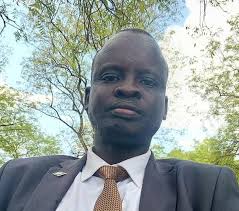
Hon. Juol Nhomngek Daniel, is a South Sudanese lawyer, politician, and academic. He is the member of the Sudan People's Liberation Movement-in-Opposition (SPLM-IO). He is a lecturer at the Stanford International University College in Juba and the Deputy Dean of its College of Law
When South Sudanese from all works of life decided to engage in a tortuous war for 21 years, they were together as the liberation struggle against external threat united them. This is many discussions involving the state always begun with the statement that South Sudan was born from one of Africa's longest and most costly liberation struggles. This is because the sacrifices that culminated in independence in 2011 were made by citizens from every corner of the land that later became the country. Yet fifteen years after independence, a persistent and increasingly controversial question continues to dominate political discourse: has the Republic of South Sudan evolved into a national state serving all citizens equally, or has it gradually transformed into what critics describe as a “Dinka System”?
The phrase “Dinka System” does not imply that the Dinka people collectively designed,
endorsed, or consciously administer the policies of the state. Rather, it is a political
characterization employed by critics, analysts, opposition figures, and some international
observers who argue that the architecture of power has become heavily concentrated around a
narrow elite network whose core leadership is predominantly drawn from the Dinka
community and whose survival depends upon maintaining centralized political, military, and
economic control. The debate is therefore not fundamentally about ethnicity, but it is about
power.
The tragedy is that while the system is often externally identified with the Dinka community,
many ordinary Dinka citizens remain among the principal victims of poverty, insecurity,
unemployment, displacement, and state failure. The beneficiaries are not an entire ethnic
group but a relatively small coalition of political, military, security, and economic elites who
operate through patronage networks that extend across multiple communities while remaining
overwhelmingly anchored within Dinka political dominance.
The First Pillar: Control of the Military and Security Apparatus
One of the most frequently cited indicators supporting the “Dinka System” thesis is the
concentration of authority within the military, intelligence services, police, and organized
forces. Critics argue that command structures within the executive, SSPDF, intelligence
institutions, and other security organs remain disproportionately controlled by officers closely
aligned with the ruling establishment.
In such an environment, state security gradually becomes indistinguishable from regime
security. The consequence is profound. When the protection of the ruling elite becomes
synonymous with the protection of the nation, dissent is no longer treated as a democratic
right but as a security threat. Opposition politics becomes criminalized, and political
competition becomes securitized.
The Second Pillar: Control of National Wealth
Political economists have repeatedly observed that control of South Sudan's oil revenues
remains one of the central instruments of political power. Rather than functioning as a
transparent national resource, critics argue that oil wealth has become the lifeblood of
patronage networks. Access to contracts, appointments, allowances, and business
opportunities frequently depends upon proximity to power rather than merit or legality. In
such a system, loyalty becomes currency. The state ceases to distribute opportunities through
institutions and instead distributes them through relationships.
The Third Pillar: The Influence of Informal Power Structures
No discussion of the “Dinka System” can avoid the controversy surrounding the influence
attributed to members of the Jieng Council of Elders (JCE). Whether exaggerated or real, the
widespread perception that unelected actors exercise substantial influence over state policy
has severely damaged public confidence in formal institutions.
When citizens believe that major national decisions are determined outside constitutional
structures, Parliament becomes ceremonial, ministries become administrative shells,
Judiciary becomes the tool of tribal control and punishment and constitutionalism becomes
political theatre. The shadow begins to appear more powerful than the institution itself.
The Fourth Pillar: The Presidency as the Centre of Gravity
Since the CPA era and throughout independence, the presidency has remained the dominant
institution in South Sudanese politics. The concentration of appointment powers, dismissal
powers, security authority, and fiscal influence has transformed the presidency into the
nucleus around which all political life revolves. Observers argue that the political system has
become less republican and more patrimonial, where access to authority depends less on
institutions and more on proximity to the executive centre. In this environment, politics
resembles a pyramid rather than a republic.
The Fifth Pillar: Patronage-Based Appointments
A recurring criticism concerns the distribution of senior appointments throughout
government. Executive and civil service positions, diplomatic postings, military promotions,
and judicial appointments are frequently viewed through an ethnic lens because institutional
transparency remains weak. Even where appointments may be legally justified, the persistent
perception of imbalance generates mistrust and fuels national fragmentation. Perception itself
becomes a political reality.
The Sixth Pillar: Cultural Dominance and State Identity
Many observers note that symbols associated with Dinka culture occupy a highly visible
place within national political life. This visibility is not inherently problematic. Every nation
reflects aspects of its majority cultures. The challenge arises when citizens from other
communities begin to feel invisible within the national narrative. A state that reflects one
culture more than others risks transforming diversity into hierarchy.
The Seventh Pillar: Resistance to Genuine Federalism
For years, federalism has been championed by many South Sudanese communities as a
mechanism for equitable governance and local autonomy. Critics argue that powerful actors
within the centralized state resist meaningful decentralization because federalism would
weaken patronage networks and redistribute authority away from the executive centre.
Centralization therefore becomes not merely an administrative preference but a survival
strategy for entrenched elites.
The Eighth Pillar: The Liberation Legacy
The SPLM/A liberation struggle remains the most powerful source of political legitimacy,
dominance and ethnic control in South Sudan. Though, it is clear that no communities
contributed more heavily to the movement's leadership and sacrifices than the Dinka and
Nuer, liberation history cannot justify tribal domination. The misuse that distorts the
liberation history has prompted critics to contend that liberation credentials have gradually
evolved from historical legitimacy into a permanent claim to political ownership of the
country legitimacy under a single tribe. A liberation movement can create a nation but it
cannot indefinitely substitute for democratic consent.
The Ninth Pillar: Suppression of Opposition
A recurring accusation from opposition groups and civil society organisations is that political
dissent is frequently framed as an ethnic or security threat. When opposition leaders are
portrayed not as political competitors but as enemies of national stability, democratic space
shrinks dramatically. The state begins to fear debate and when governments fear debate,
coercion often replaces persuasion.
The Tenth Pillar: Institutional Capture
The deepest criticism advanced by proponents of the “Dinka System” thesis is that
institutions themselves have been captured. The presidency, security organs, revenue
institutions, intelligence agencies, and strategic economic sectors are viewed as operating
within a single interconnected ecosystem whose primary objective is regime preservation.
Under such circumstances, constitutional provisions remain on paper while real power resides
elsewhere. The law exists. But the system operates above it.
Why the System Persists
The most misunderstood aspect of this debate is the assumption that the system survives
because the entire Dinka community actively supports it. Evidence suggests a more complex
reality. Many Dinka citizens privately criticize corruption, insecurity, economic collapse, and
elite excesses. Yet fear remains a powerful political force.
The result of decades of war have convinced many communities that losing political power
could mean losing physical security. Dinka political elites exploit these anxieties by
presenting every reform proposal as an existential threat to communal survival. Thus, the
system reproduces itself, not through universal consent but through fear, patronage,
insecurity, and dependency.
The Path Forward
There is a need for overhauling the current system in order to ensure radical reforms are
realised This can help the country avoiding retaining the system where one community
replaces another community while maintaining the status quo remains intact. South Sudan's
future does not lie in replacing one ethnic dominance with another. Nor does it lie in blaming
entire communities for the actions of political elites.
The main political challenge facing South Sudan is institutional rather than ethnic. Thus, the
solution requires dismantling patronage networks, professionalizing security institutions,
decentralizing authority, strengthening judicial independence, ensuring equitable
representation, implementing security-sector reforms, and restoring constitutional supremacy.
For a state to function with efficacy, it must have legitimacy, which the lawful, rightful, or
justifiable quality of an entity, rule, or action. It is the foundation of authority, transforming
raw power into accepted compliance. It determines whether a government or leader has the
recognized right to rule. It builds voluntary compliance rather than requiring constant
coercion.
The state cannot function and remain stable when it does not have legitimacy as citizens
believe that power belongs to one group. Neither can a nation survive when politics becomes
a permanent contest between communities. This is why South Sudan must ultimately decide
whether it will remain a state organized around tribal system, patronage and fear or become a
republic organized around independent institutions, citizenship and law.
It is in relation to the foregoing arguments the debate over the so-called “Dinka System” is
therefore not merely a debate about ethnicity. Rather, it is a debate about the nature of the
South Sudanese state itself. And until the question concerning what kind of state to be built in
South Sudan is answered, the country will continue to struggle between the promise of
nationhood and the reality of elite fashioned in tribal domination.
The Writer is a South Sudanese lawyer, politician, academic, and lecturer who serves as a
member of the SPLM-IO. His area of interest is Constitutional, Administrative, and
Human Rights law. He is currently actively involved in national discourse regarding
governance, the rule of law, and tribal reconciliation in South Sudan. He can be reached
via email: nhomngekjuol@gmail.com.
Share this article