
Opinion
The Architecture of Power Through War: How the SPLM-IG Converts State Sovereignty into Tribal Hegemony
Author
Juol Nhomngek
Guest Contributor
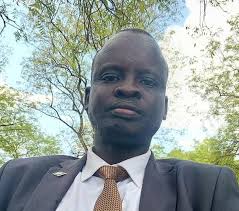
Hon. Juol Nhomngek Daniel, is a South Sudanese lawyer, politician, and academic. He is the member of the Sudan People's Liberation Movement-in-Opposition (SPLM-IO). He is a lecturer at the Stanford International University College in Juba and the Deputy Dean of its College of Law
In contemporary South Sudan, the language of sovereignty has been hollowed out and repurposed. What is publicly framed by the Sudan People’s Liberation Movement-In Government as “defending the state” increasingly functions as a political technology for consolidating power, evading accountability, and reproducing a system of control rooted not in citizenship, but in militarized identity.
This is not accidental. It is design. At the center of this design is a dangerous inversion: ignorance is recast as nationalism, coercion as patriotism, and tribal mobilization as national defense. The result is a system in which the state does not transcend ethnic identity, it weaponizes it.
State Sovereignty as Cover for Organized Impunity
Under the leadership of Salva Kiir Mayardit, the state’s coercive apparatus, particularly the National Security Service and the South Sudan People’s Defence Forces, has evolved into an instrument not merely of security, but of political survival. Laws such as the National Security Service Act, 2014 (as amended) and the Cybercrime and Computer Misuse Act 2026, ostensibly designed to protect sovereignty, have instead enabled arbitrary detention, forced recruitment, and the silencing of dissent.
This is governance by ambiguity: the law exists, but it is elastic; institutions exist, but they are subordinated; accountability is promised, but structurally impossible. The consequence is predictable. Detention centers become recruitment hubs. Prisons become pipelines to the battlefield. Street children and civilians are not protected by the state, they are consumed by it.
The Militarization of Identity: Manufacturing Tribal War
The SPLM-IG’s most effective strategy is not brute force alone, it is narrative engineering. By framing political conflict as an existential ethnic struggle, the regime transforms governance failure into communal fear. Reports from 2025–2026 indicate that soldiers and recruits are often told they are fighting a “Dinka versus Nuer war,” a framing that collapses political opposition into ethnic hostility. This narrative does three things simultaneously: It mobilizes one community through fear and obligation, delegitimizes opposition by ethnicizing dissent, and ultimately obscures state responsibility behind communal violence.
Thus, when coerced recruits, many untrained, some children, are deployed and killed, their deaths are narratively reassigned. Families are told they died at the hands of “enemy tribes,” not as victims of state coercion. Grief is redirected into anger. Anger into mobilization. Mobilization into war. This is not chaos. It is controlled fragmentation.
Coercive Recruitment as State Policy, Not Aberration
The scale and consistency of forced recruitment practices point to institutionalization rather than excess. Across Bahr el Ghazal and Central Equatoria, patterns repeat with bureaucratic precision: arrest without charge, detention in legal grey zones, conditional release tied to military enlistment, and immediate deployment, often without training.
Testimonies from former detainees, NGO documentation, and UN reporting, including findings from the United Nations Commission on Human Rights in South Sudan, confirm that these practices are systematic. The victims are not only young men but also children, some reportedly as young as ten, absorbed into a war they neither chose nor understand. This is not recruitment. It is extraction of human capital under duress.
A Hollow Army, A Prioritized Regime
The paradox of South Sudan’s military structure is stark: while domestic soldiers go unpaid for months, sometimes over a year, foreign deployments are reliably financed. The involvement of the Uganda People’s Defence Force exemplifies this contradiction. Ugandan troops, reportedly earning consistent salaries, operate alongside domestic units that survive through informal economies and, in some cases, criminal activity. This disparity reveals a deeper truth: the regime does not prioritize building a national army, it prioritizes securing loyal force. In such a system, coerced recruits are not a temporary fix; they are a structural necessity.
The Failure of Peace as Strategy, Not Accident
The collapse of the Revitalized Agreement on the Resolution of the Conflict in South Sudan is often described as a failure of implementation. That description is too generous. What we are witnessing is not failure, it is selective non-implementation. Key provisions, security sector reform, unified command structures, independent oversight, remain deliberately stalled. Why? Because their success would dilute centralized power. Peace, in this context, is not an objective. It is a resource, managed, delayed, and instrumentalized.
External Alliances and the Expansion of War Capacity
The regime’s internal strategy is reinforced externally. Collaboration with actors such as the UPDF and reported engagements with Sudan’s Rapid Support Forces extends operational capacity while diffusing accountability. These alliances are transactional, not ideological. They are designed to: increase military reach, enhance intelligence capabilities, and suppress opposition through overwhelming force. But they also internationalize the conflict, embedding South Sudan within a volatile regional security network.
The Illusion of Nationalism
Perhaps the most insidious outcome of this system is the redefinition of nationalism itself. Citizens are taught that loyalty to tribe equals loyalty to nation. That defending ethnic identity is defending sovereignty. That questioning the state is betrayal. In this environment, ignorance is not incidental, it is cultivated. It is necessary. Because an informed citizen asks questions. A mobilized subject obeys.
Conclusion: A State at War with Its Own Future
South Sudan today is not merely drifting toward conflict; it is being engineered toward it. Coercive recruitment, ethnic mobilization, external militarization, and the deliberate weakening of institutions form a coherent architecture of control. The tragedy is not only the violence itself, but its normalization. A generation is being militarized before it is educated.
Communities are being divided before they are governed. Peace is being promised while war is being prepared. And at the center of it all lies a political calculation: that power secured through fear is more reliable than legitimacy earned through reform. It is a calculation that may sustain a regime, but it is one that steadily dismantles a nation.
Share this article