
Opinion
SOUTH SUDAN: ECONOMIC REFORM WITHOUT POLITICAL REFORM IS BUILDING A HOUSE ON QUICKSAND
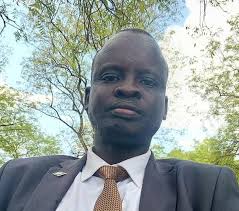
Author
Juol Nhomngek
Guest Contributor
Hon. Juol Nhomngek Daniel, is a South Sudanese lawyer, politician, and academic. He is the member of the Sudan People's Liberation Movement-in-Opposition (SPLM-IO). He is a lecturer at the Stanford International University College in Juba and the Deputy Dean of its College of Law
South Sudan does not suffer from a shortage of committees. It suffers from a shortage of political will. Every few years, another taskforce is announced, another committee is inaugurated, another communiqué is issued, and another promise is made that the economy will finally recover. Yet the ordinary citizen continues to endure inflation, currency instability, unpaid salaries, collapsing public services, and deepening poverty. The pattern is no longer surprising; it has become the architecture of governance itself.
The establishment of a nine-member Ministerial High-Level Committee on Economic Reforms is presented as a bold intervention to stabilize the economy, improve public finance, expand domestic revenue, review tax exemptions, and ensure timely payment of civil servants. These objectives are commendable in principle. The contradiction lies elsewhere. The same political establishment that has resisted implementing the structural governance reforms envisaged under Chapter IV of the Revitalized Agreement now presents itself as the architect of economic renewal. That irony cannot be ignored.
One cannot reasonably expect institutions that are themselves subjects of reform to become the sole judges of their own performance. Asking the existing political machinery to investigate and reform itself is like expecting a mirror to repaint the wall it merely reflects. The problem is not simply administrative inefficiency; it is structural. Economic collapse is often inseparable from weaknesses in governance, accountability, institutional independence, and the rule of law.
A healthy economy is not built by ministerial declarations alone. It rests upon strong institutions capable of collecting revenue fairly, managing public expenditure prudently, protecting the independence of financial institutions, enforcing transparent procurement, combating corruption, and guaranteeing equal application of the law. Without these foundations, every economic programme resembles planting seeds on bare rock while expecting a harvest.
The Revitalized Agreement already provides a comprehensive roadmap. Chapter IV recognizes that sustainable peace and economic recovery require reforms in public financial management, economic governance, transparency, accountability, and institutional oversight. Sidestepping these agreed reforms while creating parallel committees risks duplicating responsibilities, consuming scarce public resources, and weakening confidence in the peace process itself.
Economic recovery cannot emerge from political convenience. Inflation cannot be defeated through press conferences. Currency depreciation cannot be reversed through slogans. Investor confidence cannot be manufactured through appointments. Markets respond to credibility, legal certainty, institutional independence, fiscal discipline, and public trust, not political choreography.
South Sudan's economic crisis extends beyond fiscal arithmetic. It reflects deeper structural challenges, including heavy dependence on oil revenues, limited economic diversification, insecurity in many parts of the country, weak institutions, and governance deficits. Addressing only the visible symptoms while leaving the underlying causes untouched is equivalent to treating smoke while ignoring the fire.
No economy thrives where constitutional institutions remain weak, accountability mechanisms are ineffective, and public confidence continues to erode. Economic policy requires more than technical expertise; it requires political courage. The first investment any government should make is not another committee but credible institutions capable of enforcing transparency, protecting public resources, and guaranteeing equal justice.
The committee's mandate, to strengthen public finance, improve domestic revenue, review tax exemptions, and ensure timely salary payments, would undoubtedly be valuable if implemented within an environment of institutional independence and genuine accountability. Yet meaningful reform is difficult when those directing the process are also embedded within the very system many citizens and public believe requires comprehensive transformation.
As a matter of fact, enduring economic recoveries are built upon institutional reform. Countries that have escaped cycles of inflation, corruption, and fiscal instability did so by strengthening independent oversight, protecting central banks from political interference, enforcing transparent budgeting, diversifying production, investing in agriculture and infrastructure, and upholding the rule of law. Sustainable prosperity follows institutional credibility.
South Sudan possesses abundant natural resources, fertile agricultural land, a youthful population, and enormous economic potential. Its greatest deficit is not opportunity but governance. Roads cannot substitute for justice. Budgets cannot replace accountability. Revenue cannot substitute for legitimacy.
Real economic reform therefore begins where political reform begins, with implementation of the Revitalized Agreement in both letter and spirit. Independent institutions, constitutional governance, transparent public finance, security sector reform, judicial independence, and respect for the rule of law are not obstacles to economic recovery; they are its indispensable foundation.
Attempting to reform the economy while postponing these structural reforms is like attempting to empty the River Nile with a woven basket: the effort may appear busy, but the destination remains unchanged.
South Sudan deserves more than another committee. It deserves functioning institutions, constitutional accountability, lasting peace, diversified production, responsible fiscal management, independent economic oversight, and leadership willing to implement the reforms already agreed upon. Until governance reforms become the priority rather than the exception, every new economic initiative risks becoming another expensive monument to unrealized promises rather than a genuine pathway to national recovery.
The writer, Hon. Juol Nhomngek Daniel, is a South Sudanese constitutional lawyer, academic, and political figure. He holds a legal education from Makerere University in Kampala, Uganda. He is an independent legal researcher, constitutional expert, and serves as a lecturer and the Deputy Dean of the College of Law at Starford International University in Juba. He is a member of the Sudan People’s Liberation Movement in Opposition (SPLM IO).
Share this article