
Opinion
FROM LIBERATION TO DOMINATION: THE RISE OF THE DINKA STATE IN SOUTH SUDAN
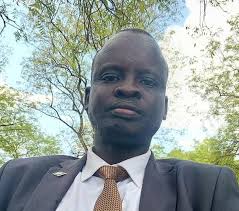
Author
Juol Nhomngek
Guest Contributor
Hon. Juol Nhomngek Daniel, is a South Sudanese lawyer, politician, and academic. He is the member of the Sudan People's Liberation Movement-in-Opposition (SPLM-IO). He is a lecturer at the Stanford International University College in Juba and the Deputy Dean of its College of Law
South Sudan is currently bogged down over the definition of the state. There is a debate that South Sudan is the Dinka State due to power, control, and the politics of exclusion in which Dinka leaders are at the centre of debate. The strategic positions that Dinka personalities find themselves in as they are at the heart of decision making in the government support this claim.
The claim that the government is “Dinka-dominated” arises from a pattern of activities in the course of running the government not just a single appointment. Critics point to the systematic concentration of individuals from the Dinka community, particularly from the Bahr el Ghazal region who are in decisive state institutions, including:
The Presidency and executive core
The military and organized forces
Intelligence and internal security
Revenue-generating institutions
Petroleum (the backbone of the economy)
This concentration is seen as structural rather than incidental, because it appears across multiple sectors simultaneously, especially those that control coercive force and financial flows.
The Presidency and Executive Core
At the apex of power is Salva Kiir Mayardit, from the Dinka community of Bahr el Ghazal. Around him are:
Key presidential advisors and security decision-makers who are overwhelmingly from the same ethnic and regional background.
Senior ministers in defense, interior, finance, justice, and information. These and other most strategic portfolios are largely held by Dinka officials.
While the government is formally a coalition under the Revitalized Transitional Government of National Unity (RTGoNU), critics argue that real decision-making authority remains concentrated within a narrow inner circle solely made up of Dinka.
Security Sector Dominance (Army, NSS, Police)
a) Military (SSPDF)
The South Sudan People’s Defence Forces is widely viewed as the backbone of political power, and:
Commander-in-Chief: the President (Dinka)
Chief of Defence Forces and key deputies: predominantly Dinka
Elite units such as the Presidential Guard (Tiger Division): commanded by Dinka officers
This concentration matters because in fragile states, control of the military equals control of the state.
b) National Security Service (NSS)
The Internal Security Bureau, one of the most powerful intelligence organs, is led by:
Gen. Akec Tong Aleu and his Deputy (Dinka)
The NSS has broad authority over arrest without warrant, indefinite detention, surveillance, and political control, making its leadership composition highly consequential.
c) Police, Prisons, and Interior
Under the Ministry of Interior:
Inspector General of Police: Dinka
Director General of Prisons: Dinka
Wildlife (paramilitary) leadership: Dinka
This creates what critics call “vertical dominance”, from ministerial level down to operational command.
Control of Economic Arteries
a) Petroleum Sector
Oil accounts for over 90% of government revenue. In this sector:
Current ministry leadership and undersecretaries: Dinka
Nilepet (state oil company): Dinka-led
Key operational roles in joint oil companies: Dinka
Control of oil translates into control of state financing, patronage networks, and international contracts.
b) Revenue Authority
At the South Sudan Revenue Authority:
Commissioner General, deputies, and key commissioners: predominantly Dinka
This institution controls taxation, customs, and non-oil revenue, reinforcing perceptions that financial inflows are centrally controlled by one group.
5. Administrative and Bureaucratic Penetration
Beyond ministers, critics emphasize mid- to high-level bureaucracy:
Undersecretaries across ministries (petroleum, electricity, ICT, labor, etc.)
Director Generals in aviation, petroleum authorities, and statistics
Leadership in public universities and national agencies
This suggests not just political leadership dominance, but institutional embedding across the state apparatus.
6. Judiciary and Legal Architecture
The judiciary, led by Chief Justice Dr. Benjamin Baak Deng Bol, has also seen:
Promotions of multiple Dinka judges to appellate and high court levels
Critics argue that influence over the judiciary affects:
Constitutional interpretation
Electoral disputes
Accountability mechanisms
7. Immigration, Passports, and Border Control
Even in areas where top leadership is not exclusively Dinka (e.g., immigration), senior operational influence remains significant through:
Deputy and advisory roles
Security-linked oversight positions
This reinforces the perception of indirect control even where formal leadership is diverse.
8. Why “Bahr el Ghazal Government”?
The more specific label, “Bahr el Ghazal government”, emerges because:
A significant proportion of these Dinka officials originate from the Bahr el Ghazal region, the President’s political base
Key security and political alliances are historically rooted in that region
No any appointments at any levels of government can be made without the approval by the Dinka leaders from Bahr El Ghazal and the appointees must execute the will of Bahr El Ghazal.
Thus, critics see not just ethnic concentration, but regional consolidation within that ethnicity.
Counterpoint: Formal Power-Sharing vs. Actual Power
It is important to maintain analytical balance:
The RTGoNU includes representatives from multiple ethnic and political groups (e.g., SPLM-IO, other parties)
Some non-Dinka figures hold visible positions (including vice presidents and ministers)
However, critics argue that, formal inclusion does not necessarily equal substantive power, especially if control of security forces and finances is centralized elsewhere or by one community.
Conclusion: Structural Perception, Not Just Rhetoric
The central problem is not merely who holds office, but how power is organized and exercised. When authority is concentrated in a narrow political-security network, institutions lose autonomy, accountability weakens, and public trust erodes. It is this reason the label “Dinka government” persists due to three factors namely:
Control of coercive institutions (army, NSS, police)
Control of financial systems (oil, revenue authority)
Reinforcement through bureaucratic and judicial appointments
Therefore, what is required to correct this kind of system is not just cosmetic reshuffling, but a systemic overhaul that redefines the rules of governance. Without this, the perception of Dinka Government will not fade away, whether fully accurate or politically contested as long the state of South Sudan continues to have power heavily centralized within one ethnic and regional network.
In order to overturn this system, South Sudan needs radical, rules-based reforms that insulate key institutions from political and tribal capture, especially in the security sector, revenue administration, the judiciary, and natural resource management. This means establishing merit-based appointments, transparent oversight mechanisms, enforceable term limits, and genuine separation of powers.
Independent commissions must be empowered to audit, investigate, and regulate without interference, while the armed forces and intelligence services must be professional and subordinated to constitutional, not personal, authority. A stable future depends on transforming the state from a vehicle of control into a framework of law.
Only strong, independent institutions, trusted across communities. can replace cycles of dominance with a durable, inclusive national order. Without such structural reform, the crisis will persist; with it, the foundation for legitimacy, unity, and long-term stability can finally emerge.
The Writer, Hon. Juol Nhomngek Daniel is the constitutional lawyer, He serves as a lecturer in Constitutional and Human Rights Law, the researcher and is the Deputy Dean of the College of Law at Starford International University
Share this article