Opinion
Freedom of Speech and Expression in South Sudan: The Lifeblood of Democracy and the Guardian of Accountability
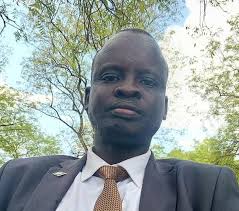
Author
Juol Nhomngek
Guest Contributor
Hon. Juol Nhomngek Daniel, is a South Sudanese lawyer, politician, and academic. He is the member of the Sudan People's Liberation Movement-in-Opposition (SPLM-IO). He is a lecturer at the Stanford International University College in Juba and the Deputy Dean of its College of Law
In our daily life, we hear about the importance of freedom of speech and expression. This is why freedom of speech and expression has been likened to the oxygen of democracy. Hence, a society where citizens cannot freely speak, criticize, question, publish, or access information is like a body deprived of air, alive in appearance but suffocating in reality. As we hope to be democratic country, we must develop values of constitutional democracies under which freedom of expression is not treated as a gift from the government but as a fundamental human right inherent in every human being by virtue of their humanity.
Freedom of speech and expression in legal system of South Sudan
In South Sudan legal framework, freedom of speech and expression occupies a central
position within the Bill of Rights contained in Part Two of the Transitional Constitution of the
Republic of South Sudan, 2011 (as amended). It serves as the bridge between government
accountability and citizen participation, between transparency and secrecy, and between
democracy and authoritarianism.
The importance of this right was eloquently captured by the European Court of Human
Rights in Handyside v. United Kingdom (1976) 1 EHRR 737, where the Court held that
freedom of expression protects not only information and ideas that are favourably received
but also those that “offend, shock or disturb the State or any sector of the population.” Such
are the demands of pluralism, tolerance, and broad-mindedness upon which democratic
societies are built.
Constitutional Foundation in South Sudan
The supreme legal basis for freedom of expression in South Sudan is Article 24 of the
Transitional Constitution, which provides: “Every citizen shall have the right to the freedom
of expression, reception and dissemination of information, publication, and access to the
press without prejudice to public order, safety or morals as prescribed by law.” This
constitutional guarantee is reinforced by Article 9(1), which recognizes that every person is
entitled to fundamental rights and freedoms, and Article 25, which guarantees freedom of
assembly and association. The Constitution therefore recognizes three interconnected
dimensions of expression:
Freedom of Opinion
Every individual possesses an absolute right to hold opinions, beliefs, and convictions
without interference from the State. Governments may regulate conduct, but they cannot
lawfully regulate thoughts.
Freedom to Impart Information
Citizens are entitled to speak, write, publish, broadcast, criticize public officials, participate in
political discourse, and communicate through traditional or digital platforms.
Freedom to Seek and Receive Information
The right to expression would be meaningless without access to information. Citizens cannot
effectively participate in governance if public information remains hidden behind walls of
secrecy. This principle forms the constitutional basis of the Right of Access to Information
Act, 2013.
Freedom of Expression as a Pillar of Democracy
Freedom of expression performs several indispensable democratic functions, which include:
First, It Promotes Government Accountability
Corruption flourishes in darkness but struggles in sunlight. Journalists, civil society
organizations, opposition parties, and ordinary citizens serve as public watchdogs by
exposing abuse of power and demanding accountability. The Inter-American Court of Human
Rights in Claude Reyes et al. v. Chile (2006) held that access to state-held information is an
essential component of democratic governance because citizens cannot effectively oversee
public institutions without information.
Second, It Facilitates Political Participation
Democracy requires informed voters. Citizens must be able to debate public policies, criticize
leaders, and exchange political ideas without fear of retaliation. The African Commission in
Media Rights Agenda v. Nigeria (2000) AHRLR 200 (ACHPR) emphasized that freedom of
expression is indispensable to democratic governance and that state security cannot be
invoked as a blanket justification for censorship.
Third, It Protects Human Dignity
The ability to express opinions freely is central to individual autonomy and self-realization.
Silencing citizens reduces them from participants in governance to mere spectators.
Fourth, It Serves as an Early Warning System
Free expression allows grievances to be aired peacefully before they escalate into violence.
Where speech is suppressed, frustration often seeks alternative and sometimes destructive
channels. As the saying goes, "when mouths are closed, guns begin to speak."
The Right of Access to Information
The Right of Access to Information Act, 2013 operationalizes Article 24(2) of the
Constitution.
The Act embodies the principle of maximum disclosure, requiring public bodies to make
information available except in narrowly defined circumstances. Among its key features are:
•Mandatory publication of institutional information;
•Citizen access to public records;
•Independent oversight through the Information Commissioner;
•Timely responses to requests for information;
•The principle of severability, requiring only genuinely sensitive information to be
redacted while releasing the remainder.
The importance of access to information was reinforced by the UN Human Rights Committee
in Toktakunov v. Kyrgyzstan, Communication No. 1470/2006 (2011), which held that access
to state-held information is an essential component of Article 19 of the ICCPR.
Natural Regulatory Mechanisms of Free Speech
Contrary to popular misconception, freedom of expression contains its own natural checks
and balances.
The Marketplace of Ideas
Justice Oliver Wendell Holmes famously argued that truth emerges from the competition of
ideas in the marketplace of public debate. Bad ideas are not defeated through censorship; they
are defeated through better ideas.
Public Scrutiny
False statements are often corrected through public discussion, investigative journalism,
academic research, and civic engagement.
Reputation and Credibility
Individuals who repeatedly spread falsehoods lose public trust and credibility. Society
naturally rewards reliable speech and penalizes dishonest speech.
Democratic Accountability
Political leaders are subjected to public criticism, elections, media scrutiny, and civic
oversight.
These natural regulatory mechanisms make excessive state censorship unnecessary and often
counterproductive.
Permissible Restrictions on Freedom of Expression
Freedom of expression is not absolute. Under Article 24 of the Constitution and Article 19(3)
of the ICCPR, restrictions may be imposed only when they satisfy the internationally
recognized three-part test.
Legality
Restrictions must be prescribed by clear, accessible, and predictable law. Vague concepts
such as "anti-government speech" or "offensive criticism" cannot justify lawful restrictions.
Legitimate Aim
Restrictions must pursue a legitimate objective such as:
•National security;
•Public order;
•Public health;
•Public morals;
•Protection of the rights and reputations of others.
Necessity and Proportionality
The restriction must be the least intrusive means available. Governments must demonstrate
that the restriction is genuinely necessary and proportionate to the harm being prevented. The
UN Human Rights Committee in General Comment No. 34 (2011) emphasized that
limitations on expression must never become tools for suppressing political opposition or
public criticism.
Defamation and Criminal Sanctions
One of the most significant developments in African human rights jurisprudence is the
rejection of imprisonment for defamation. In Lohé Issa Konaté v. Burkina Faso, Application
No. 004/2013 (African Court on Human and Peoples' Rights, 2014), the Court held that
custodial sentences for defamation violate Article 9 of the African Charter on Human and
Peoples' Rights.
The Court urged African states to decriminalize defamation and replace imprisonment with
proportionate civil remedies. The reasoning is straightforward: a democratic society cannot
imprison citizens merely because they criticize powerful individuals. Public officials, by
virtue of their public responsibilities, must tolerate a higher degree of scrutiny than ordinary
citizens.
National Security and Freedom of Expression
National security is a legitimate concern of every state. However, it must not become a magic
wand used to silence dissent. In Association for Human Rights v. Sudan (2009) AHRLR 56
(ACHPR), the African Commission held that governments cannot invoke national security as
a blanket justification for withholding information or suppressing expression.
Restrictions must demonstrate a direct and substantial connection to an actual threat.
The mere embarrassment of public officials does not constitute a national security threat.
Nor does criticism of government policies amount to sedition. A government that fears
criticism is not protecting national security; it is protecting political comfort.
Digital Freedom and Emerging Challenges
As South Sudan expands internet connectivity, digital expression has become increasingly
important. Online platforms now function as modern public squares where citizens debate
public affairs, expose corruption, and exchange information. The Declaration of Principles on
Freedom of Expression and Access to Information in Africa (2019) recognizes internet access
as an integral component of modern freedom of expression.
Any cybercrime legislation must therefore be interpreted consistently with constitutional
guarantees and international human rights standards. Cybercrime laws should target genuine
criminal conduct such as fraud, hacking, identity theft, and cyber harassment—not legitimate
political criticism or investigative journalism.
Regional and International Obligations
South Sudan's constitutional framework is reinforced by regional and international legal
instruments, including:
Universal Declaration of Human Rights (1948) under Article 19 guarantees freedom of
opinion and expression. Then International Covenant on Civil and Political Rights under
Article 19 protects expression while Article 20 prohibits incitement to discrimination,
hostility, or violence. In the same line, African Charter on Human and Peoples' Rights
under Article 9 guarantees the right to receive information and to express and disseminate
opinions.
At East African Community level, the East African Community Treaty under Articles
6(d) and 7(2) commit Partner States to democracy, rule of law, accountability, and respect for
human rights. All these instruments provide persuasive and, in many cases, binding standards
for interpreting constitutional freedoms in South Sudan.
Conclusion
Freedom of speech and expression is not merely another constitutional provision; it is the
heartbeat of constitutional democracy. It enables citizens to question authority, expose
corruption, demand accountability, participate in governance, and protect human dignity. A
nation where citizens fear speaking is like a river whose flow has been blocked. Pressure
builds beneath the surface until the dam eventually bursts. By contrast, a society that permits
open discussion resembles a flowing river, dynamic, self-correcting, and capable of
sustaining life.
The true test of constitutionalism is not whether governments tolerate praise, but whether
they tolerate criticism.
As constitutional democracies across the world have repeatedly affirmed, freedom of
expression exists precisely to protect unpopular opinions, uncomfortable truths, and
dissenting voices. For South Sudan to achieve democratic maturity, peace, transparency, and
accountability, Article 24 of the Constitution must be interpreted generously, restrictions must
remain exceptional, and citizens must be allowed to speak without fear. For where speech is
free, democracy breathes; where speech is silenced, democracy suffocates.
The writer is a South Sudanese constitutional lawyer, academic, and political reformer,
and a member of the SPLM-IO. He is a lecturer and Deputy Dean at the College of Law,
Starford International University in Juba.
Share this article